Stargazing in Jibhi: The Best Nights for Viewing the Milky Way
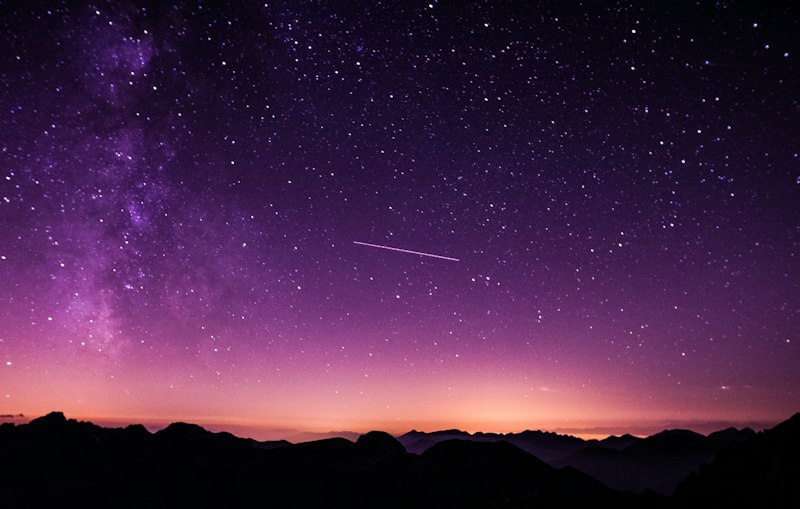
There is a moment, on a clear night in Jibhi, when you look up and the sky stops you in your tracks. Not the polite, pleasant sky you see from a city rooftop — a handful of bright stars, maybe a planet if you know where to look. This is something else entirely. This is the full, unfiltered, almost violent enormity of the night sky. Thousands upon thousands of stars, a smear of the Milky Way so bright and dense it looks solid, and a silence so complete that the only sound is your own breathing. Jibhi, at 8,200 feet and far from any major light source, is one of the best places in India to experience this. Here is how to make the most of it.
Why Jibhi Is So Good for Stargazing
Three factors combine to make the Kullu valley around Jibhi exceptional for observing the night sky. First, altitude. The higher you go, the thinner the atmosphere becomes, and the less it scatters and absorbs starlight. At 8,200 feet, you are well above much of the atmospheric moisture that dims the sky at lower elevations. Second, light pollution is virtually nonexistent. The nearest city of any size is hours away by road, and the villages in the valley produce almost no artificial light at night. Third, the air in the mountains, particularly after the monsoon has washed it clean, is extraordinarily clear. On a good night, you can see the Andaman Islands from the top of a mountain — not literally, but the principle applies. The visibility is stunning.
The Best Season for Stargazing: September through November offers the clearest skies. The monsoon has ended, the air has been washed clean, and the nights are long enough to see deep into the sky. Winter months (December-February) also offer excellent conditions, but the cold is significant — temperatures can drop well below freezing after midnight.
Finding the Milky Way: When and Where to Look
The Milky Way — our own galaxy seen edge-on — is visible to the naked eye whenever the sky is dark enough and clear enough, and the moon is not too bright. From Jibhi, it is visible for much of the year, but the timing and position in the sky change with the season.
In the summer months (May to August), the Milky Way rises in the east around midnight and arcs high across the sky by 2 AM. It is at its most dramatic during this period — the galactic centre is high overhead and the band of stars is at its densest and brightest. In autumn (September to November), the Milky Way is visible earlier in the evening, setting in the west by midnight. In winter, it is largely below the horizon for most of the night.
To find it, face south on a clear summer night after 1 AM. Let your eyes adjust to the dark for at least 20 minutes — do not look at your phone screen. The Milky Way will appear as a broad, luminous river stretching from horizon to horizon. It is unmistakable once you see it.
What Else to Look For
The Milky Way is the headline act, but the supporting cast is extraordinary. Jupiter and Saturn, when visible, are bright enough to spot with the naked eye and stunning through even a basic pair of binoculars. The Pleiades star cluster — a tight group of blue-white stars — is visible in winter and looks like a tiny smudge of diamonds. Shooting stars are common, particularly during meteor shower season (August is peak, when the Perseids are active).
- Summer (May-August): Milky Way high overhead after midnight. Scorpius constellation visible low in the south. Perseids meteor shower in mid-August.
- Autumn (Sep-Nov): Milky Way visible in the early evening. Andromeda Galaxy visible as a faint smudge to the naked eye — the most distant object you can see without a telescope.
- Winter (Dec-Feb): Orion dominates the sky. The Pleiades and Hyades clusters are spectacular. Jupiter often bright in the evening sky.
Practical Tips for a Stargazing Night
Dress warmer than you think you need to. Mountain nights are brutally cold, and standing still for an hour under the stars will chill you to the bone faster than almost any other activity. Layers, a warm hat, gloves, and a thick jacket are non-negotiable after 10 PM.
Use a red-light torch if you need one. White light destroys your night-adapted vision in seconds. Most astronomy apps and websites will tell you this — the red filter is key. Many phone torches have a red mode; use it.
Find a spot with an open view of the sky — away from the treeline if possible. The meadow above Jibhi village, or the open ground near the road to Jalori Pass, both offer wide horizons. Lie down on a blanket if you can. The neck ache from looking up standing is real, and lying down is simply more comfortable for the amount of time you will want to spend out there.
A Night That Changes You
There is a reason people travel thousands of kilometres to see the stars. It is not tourism in the conventional sense. It is something closer to a recalibration. When you stand under the full weight of the night sky in Jibhi — when the Milky Way is so bright it casts a faint shadow — something shifts in your sense of scale. The problems that seemed urgent yesterday feel smaller. The noise that fills your life in the city feels distant. For a few hours, you are simply a human being on a small planet, looking out into an incomprehensible vastness, and finding it beautiful.
Staying in Jibhi? Book Direct at Emberwood
Handcrafted mountain cottages from ₹2,500/night — outdoor jacuzzi, rooftop café & Tirthan Valley views. Only 7 rooms.
Check Availability → 📲 WhatsApp UsFrequently Asked Questions
Can you see the Milky Way from Jibhi?
Yes — Jibhi has Bortle 2-3 skies (very dark), and the galactic core is visible from March to October, peaking June-August. Jalori Pass and Serolsar Lake offer even darker horizons.
What's the best month for stargazing in Jibhi?
April-June and September-October — post-monsoon/pre-winter have clearest skies. Avoid July-August (cloudy) and full-moon nights.
Do I need a telescope?
No. Naked-eye views of the Milky Way, Jupiter and Saturn are stunning. A basic pair of binoculars (10x50) upgrades the experience significantly. Telescopes are optional.
Where in Jibhi is best for stargazing?
Jalori Pass (3,120m, 12 km from Jibhi) is darkest. Serolsar Lake even more so if you stay till after dark. Emberwood's rooftop café offers a low-effort alternative with full-sky visibility.